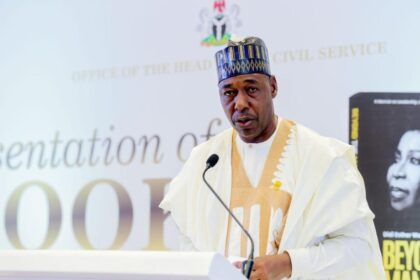

Vice President Kashim Shettima has said Nigeria is set to adopt lessons from Ethiopia’s agricultural transformation as part of efforts to achieve food sovereignty and position Africa as the food basket of the world.
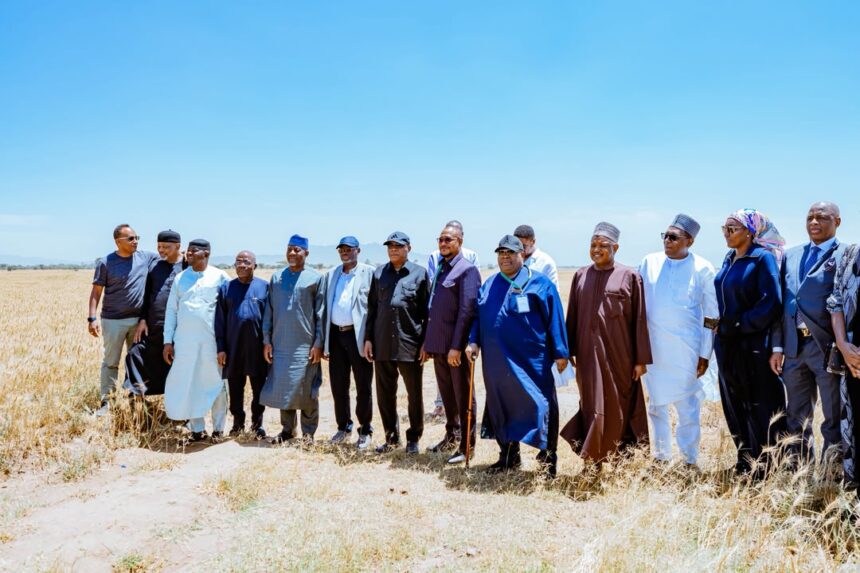
Shettima stated this on Thursday during the Ethiopia–Nigeria Leadership Exchange, where he led a Nigerian delegation on a tour of farms and agricultural facilities in Oromia, Ethiopia.
The Vice President said Ethiopia’s Oromia agricultural model provides a roadmap for African countries seeking to boost food production, attract investment and strengthen agribusiness.

He noted that Ethiopia had successfully transformed its wheat sector from a major import-dependent system into a self-sufficient one, with surplus production now exported to neighbouring countries.
According to him, Nigeria plans to leverage Ethiopia’s experience by promoting mechanised farming, improved seeds, climate-smart agriculture and modern agricultural practices.
“Food dependency compromises our sovereignty. Without independence in food production, a nation remains incomplete in its sovereignty,” Shettima said.
He stressed that Nigeria and Ethiopia could play a major role in securing Africa’s food future through stronger cooperation in large-scale agricultural production.
The Vice President described Ethiopia as a model of agricultural success, saying Africa must develop the capacity to feed itself rather than depend heavily on external sources.
“Africa must learn to feed itself. Ethiopia is doing it and Nigeria is on course to do the same. Ethiopia is a success story worthy of emulation,” he said.
Shettima also announced that Nigeria would begin a massive tree-planting campaign during the next rainy season, targeting the planting of 20 billion trees as part of environmental restoration efforts.
He explained that the initiative would draw inspiration from Ethiopia’s Green Legacy Initiative, which combines environmental protection with economic and livelihood benefits.
Earlier, President of Oromia Regional State, Shimelis Abdisa, said Ethiopia was expanding agricultural production, with more than 200 crop varieties cultivated across the country.
Abdisa added that wheat production alone contributes over $3.1 billion annually to Ethiopia’s economy, while the country continues to increase exports of agricultural products including coffee, bananas and avocados.
Never miss a moment! Get the stories shaping Nigeria, delivered straight to your phone. Follow The Eagle Times Nigeria on WhatsApp for breaking news, exclusive reports, and the headlines everyone will be talking about, before anyone else.