
By Kayode Adebiyi
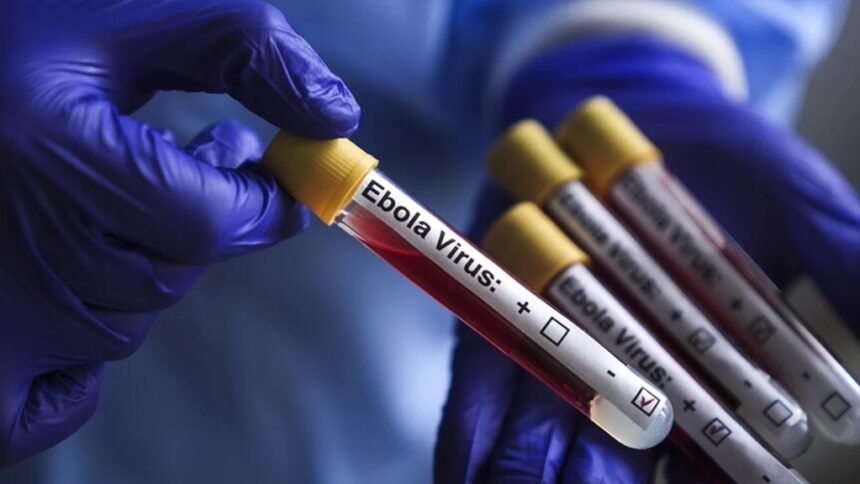
In 2014, when Ebola was first imported into Nigeria, the nation was rattled but rose to the occasion; it recorded one of the best healthcare emergency interventions in modern history.
Again in 2026, the Bundibugyo strain of Ebola came without warning, testing a nation that thought it had written the final chapter on one of its most terrifying epidemiological foes.”

. When an international flight touched down in Abuja, carrying a traveller who had transited through Addis Ababa from Uganda, it brought with it more than just a passenger.
By Oct. 10, the 42-year-old woman was exhibiting a fierce fever, body aches, a severe sore throat and diarrhea.
She sought help at a private clinic, unaware that a microscopic threat was quietly crossing the threshold into Nigeria’s capital.
However, what happened next became a masterclass in vigilance and speed.
Healthcare workers at that private facility recognised the clinical warning signs and epidemiological red flags.
Their prompt notification to the Nigeria Centre for Disease Control and Prevention (NCDC) altered the trajectory of a potential disaster.
By October 20, the NCDC National Reference Laboratory confirmed what everyone dreaded: Ebola, specifically the Bundibugyo species.
The moment the results were verified, the national machinery, which had the experience of 2014, roared to life.
The Emergency Operations Centre was activated, instantly bridging federal agencies, state health ministries and global partners, including the Africa Centre for Disease Control and the WHO.
Disease control experts later praised that initial window of action.
A senior public health epidemiologist in Abuja commended the frontline health facility that reported the case.
“The prompt reporting by the frontline private health facility and the immediate laboratory turnaround time by the NCDC reference network prevented what could have been an untracked community transmission loop.
“In viral hemorrhagic fevers, the first forty-eight hours after laboratory confirmation dictate whether you control the virus or the virus controls you.”
With the machinery spinning, the immediate battle shifted to contact tracing.
Public health teams spread out to map every possible intersection the patient had made.
They identified 53 primary contacts, including healthcare workers, domestic staff and family members.
These individuals were placed under strict public health surveillance and quarantine protocols.
To ease the immense psychological and financial strain of being pulled away from daily livelihoods, the Federal Government stepped in by providing accommodation, feeding and financial support reviews.
Health experts say managing those contacts required a delicate blend of strict science and deep empathy.
“Managing contacts requires a delicate balance of strict public health surveillance and compassionate social support.
“The government ensured that accommodation, feeding and financial support reviews were integrated into the isolation protocol.
“If you ask citizens to stay away from their livelihoods to protect public safety, the system must cushion that economic blow,” a health expert said.
Inside the University of Abuja Teaching Hospital, which was designated as the primary isolation and treatment centre, dedicated clinicians and case managers worked around the clock.
Their efforts paid off as the patient responded well to supportive management, with her condition stabilising under expert care.
Meanwhile, leadership at the top, led by Coordinating Minister of Health and Social Welfare Prof. Muhammad Ali Pate, maintained transparent public communication.
The health leadership also reinforced diagnostic stockpiles and border screening protocols across major international airports in Lagos, Abuja, Enugu, Kano and Port Harcourt.
As the response deepened, international dimensions came into play.
Africa CDC Director-General Jean Kaseya announced that a team of leading Ebola scientists, led by co-discoverer Jean-Jacques Muyembe, would investigate the outbreak’s origin, exploring genomic links to a concurrent case in Kenya.
Simultaneously, under strict international health regulations, meticulous arrangements were made for the safe medical evacuation of the patient and her husband to Switzerland.
The culmination of these coordinated efforts arrived swiftly.
WHO Regional Director for Africa, Prof. Mohamed Janabi, took to social media to officially declare that Nigeria currently has no active Ebola cases following the successful evacuation.
Praising the nation’s swift execution, Janabi congratulated all involved.
“On behalf of WHO and all partners, I warmly congratulate the Government of Nigeria, health workers, clinicians, emergency responders and all those involved in the response.
“This is a remarkable achievement and a testament to what Africa can accomplish when we work together,” he said.
Furthermore, the NCDC is reinforcing its stance that there is no cause for alarm.
The NCDC Director-General, Dr Jide Idris, dismissed rumours linking the Ebola outbreak to a possible election postponement.
According to him, Nigeria currently has no confirmed case.
Idris spoke at a virtual capacity-building workshop for journalists on effective Ebola reporting in Lagos.
He warned against misinformation that could undermine containment efforts.
Idris said that 54 primary contacts linked to a woman evacuated to Switzerland remained under daily surveillance, in spite of three contacts who developed symptoms last week, testing negative for Ebola.
He cautioned that the absence of a confirmed case did not mean Nigeria had been declared Ebola-free, stressing that surveillance and contact tracing must continue until the authorities establish that no further transmission has occurred.
“The fact that we currently have no confirmed case does not mean we should declare Nigeria Ebola-free.
“We must continue surveillance and ensure that all contacts are properly monitored,” he said.
Global health security analysts echoed the sentiment.
They note that safe medical evacuation and subsequent WHO clearance underline the efficacy of Nigeria’s international health partnerships.
They say it proves that transparency and adherence to global health governance yield better outcomes than insular concealment.
However, even as the immediate crisis subsided and contacts completed their monitoring cycles, healthcare leaders are warning against a return to complacency.
The Intensive and Critical Care Society of Nigeria issued an urgent appeal for deep structural upgrades across public hospitals, reminding the nation that emergency responses are only as strong as their permanent foundations.
A prominent critical care physician noted that: “An isolation ward is only as strong as the intensive care backing it.
“We have successfully managed this imported case through extraordinary mobilisation.
“However, our public hospitals require sustained capital investment in medical gases, advanced life support systems, and specialised training for critical care nurses and physicians if we are to withstand systemic shocks.”
Stakeholders say the Abuja Ebola incident became a defining mirror for Nigeria’s health security.
They note it showcased a mature, battle-tested system that remembered the lessons of 2014, where early detection, contact tracing, and community engagement stopped a catastrophe.
Experts say the response also proves that when science, leadership and public cooperation align, a nation can stare down a deadly pathogen and win, leaving behind a blueprint of resilience for the world to witness.
Never miss a moment! Get the stories shaping Nigeria, delivered straight to your phone. Follow The Eagle Times Nigeria on WhatsApp for breaking news, exclusive reports, and the headlines everyone will be talking about, before anyone else.